
Staffing the Guest Experience: A Smarter Approach to Experiential Activations
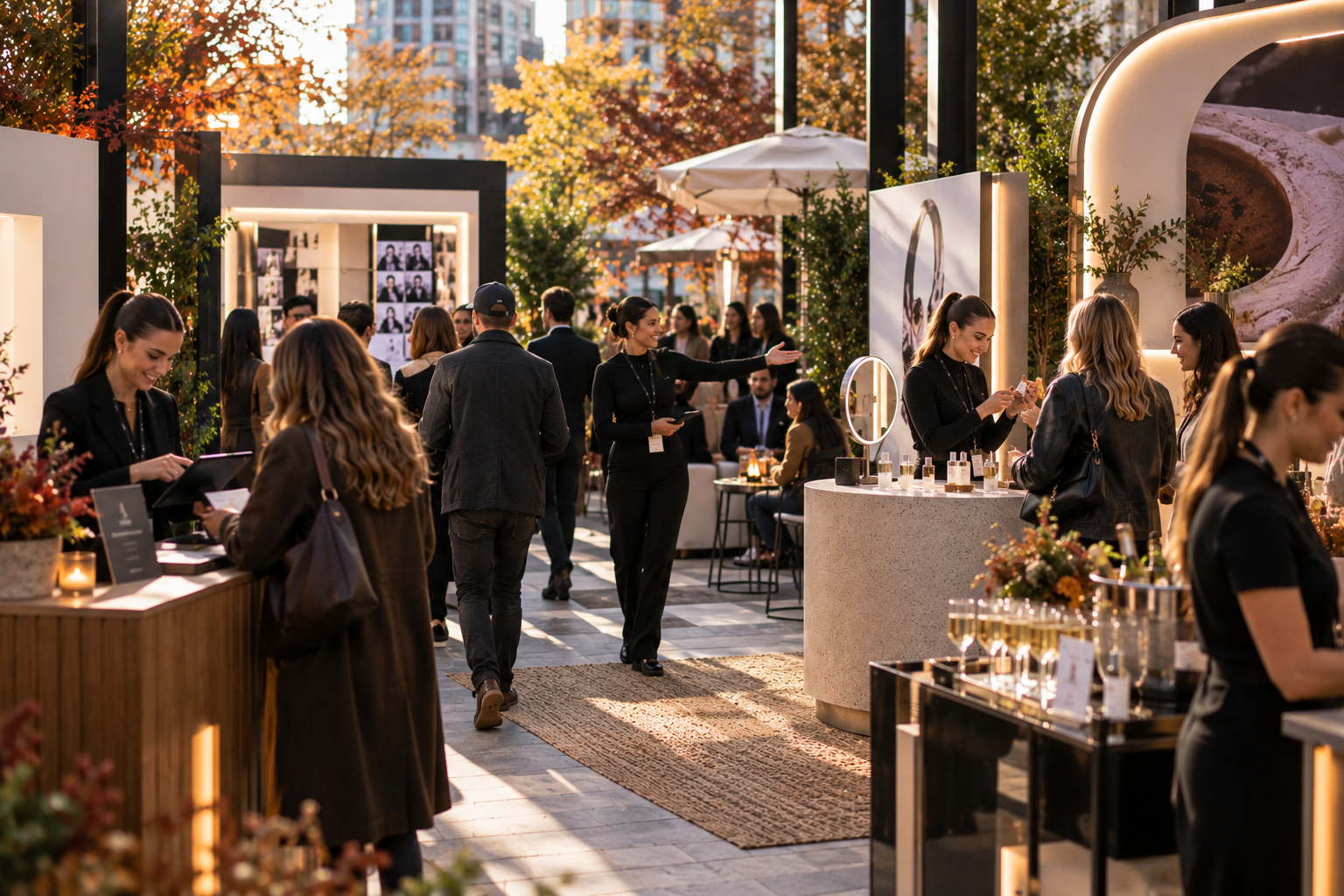
When planning an experiential activation, staffing often begins with a number: ten brand ambassadors, four hosts, two product specialists, one event manager. But headcount alone doesn't tell you whether the right people are in the right places, or whether the staffing plan actually supports the experience being created.
A better place to start is with the guest journey. From the moment someone approaches an activation to the moment they leave, there are a series of interactions that shape how they experience the brand. Some are obvious: check-in, product sampling, demonstrations, VIP hospitality. Others happen in the spaces between those moments, when a guest needs direction, has a question, joins a queue, or isn't quite sure what they're supposed to do next.
The guest journey is, in many ways, a staffing plan. Understanding where human interaction adds value, and what each of those interactions needs to accomplish, can help experiential producers build stronger teams, use staffing budgets more effectively, and create a more seamless brand experience.
Start With the Experience, Not the Headcount
Before deciding how many people an activation needs, it helps to map how guests will actually move through it. Where do they arrive? What happens first? Do they need to check in? Is the experience self-guided or does someone need to explain it? Where are the primary brand interactions? Will guests sample a product, participate in a demonstration, enter information, receive a gift, visit a VIP area, or move between multiple experiences?
Once that journey is clear, staffing decisions become much more intentional. A brand ambassador positioned at an entrance may be there to create energy and draw people in. A host at registration needs to move guests through efficiently while still making the interaction feel welcoming. A product specialist may need deeper brand knowledge and the ability to answer detailed questions. A VIP host may require a completely different level of hospitality, discretion, and situational awareness. They may all technically fall under "event staff," but they aren't performing the same function. Effective brand activation staffing begins by understanding those differences.
Staff the Moments That Matter
Not every interaction within an experiential activation needs to be elaborate. Often, some of the most important touchpoints are also the simplest.
Consider arrival. A beautifully designed activation can immediately create friction if guests don't know where to enter, which line to join, or whether they need to check in. The right staff positioned at that moment can make the experience feel intuitive before the guest has even reached the primary activation.
The same principle applies throughout the event. A brand ambassador may help someone understand how to participate in an experience. A product specialist can turn a sample into a meaningful product conversation. A host can recognize when a line needs to move faster. An event manager can reposition team members as traffic patterns change.
None of those interactions happen independently of the creative concept. They help the concept work in the real world. For an experiential producer, the question isn't simply, "Where do we need staff?" It's "Where does a human interaction make this experience better?"
Think About the Spaces Between the Main Touchpoints
Production plans naturally focus on the major moments: registration, the hero activation, sampling, a stage moment, VIP hospitality, gifting. But the guest experience also happens between them.
Someone needs to get guests from check-in to the activation. A line may form somewhere it wasn't expected. A guest finishes one part of the experience and doesn't immediately understand where to go next. A high-traffic area suddenly needs another person while a quieter area is overstaffed.
These transitions can seem minor on a floor plan, but they are often where an experience begins to feel either effortless or confusing.
Strong experiential marketing staffing accounts for those in-between moments. That doesn't necessarily mean adding another person to every transition point. It means considering guest flow when determining positions and giving onsite leadership enough flexibility to adjust staffing as the activation evolves.
Match the Role to the Interaction
One of the advantages of planning staffing around the guest journey is that it forces a more useful question than simply whether someone is "on-brand." What does this person actually need to be good at?
Someone responsible for attracting consumers into a high-energy activation may need confidence, personality, and the ability to initiate conversations repeatedly. Someone delivering product education may need strong retention, credibility, and the ability to explain information naturally rather than reciting talking points.
Hospitality positions require another skill set. VIP guests may expect warmth without over-familiarity, attentiveness without hovering, and someone who can read a room without needing constant direction.
The best brand ambassador staffing isn't about finding one type of person and placing them everywhere. It's about matching talent to the interaction they're responsible for creating.
More Staff Isn't Always Better Staffing
Strategic event staffing doesn't automatically mean increasing headcount.
Sometimes the better solution is changing where people are positioned. It may mean staggering call times, combining compatible responsibilities, increasing coverage during peak traffic, using team leads more effectively, or reducing staff in areas where the experience is intentionally self-guided.
This is particularly important when producers are balancing ambitious experiential concepts against real budgets. An experienced event staffing agency should be able to look at the scope of an activation and help identify where staffing will have the greatest impact. The objective isn't to put a person at every possible touchpoint. It's to make sure the right interactions are supported without adding unnecessary labor or complexity. A well-designed staffing plan should make both the guest experience and the production more efficient.
Consider What the Guest Needs From Each Interaction
Different moments within the same activation ask different things of the staff representing the brand.
At arrival, the guest may need clarity.
At check-in, they may need efficiency and hospitality.
During an interactive experience, they may need direction.
At a product touchpoint, they may need knowledge and conversation.
In a VIP environment, they may expect recognition and elevated service.
At exit, they may need gifting, information, a final call to action, or simply a warm conclusion to the experience.
Thinking about staffing this way helps clarify not only how many people are needed but also how they should be cast, trained, and managed.
It also reinforces something that's easy to lose when looking at staffing purely through a spreadsheet: every role exists because of something the guest needs.
Build Flexibility Into the Staffing Plan
The guest journey designed during pre-production and the guest journey that unfolds onsite aren't always identical. Attendance may arrive in waves instead of evenly. A particular part of the activation may become unexpectedly popular. Guests may spend more time at one touchpoint than anticipated, creating a bottleneck somewhere else. Weather, venue conditions, timing changes, or client requests can alter the flow entirely. A staffing plan needs enough flexibility to respond.
That may mean identifying positions that can shift as traffic changes, establishing team leads who can redistribute coverage, or building a clear communication structure so adjustments can happen quickly without disrupting the experience.
For larger experiential activations, onsite staffing management becomes particularly important. The producer should be able to focus on the larger production while the staffing partner monitors what is happening with the team and adapts accordingly. Planning the guest journey gets the right people into the right places. Managing the activation keeps them there as the event evolves.
Scale the Experience, Not Just the Headcount
This approach becomes even more important for multi-day and multi-market brand activations.
Scaling from one market to ten isn't simply a matter of multiplying the number of brand ambassadors. The experience itself needs to remain consistent even when venues, audiences, local teams, and logistical conditions change.
For nationwide event staffing, that means identifying which guest touchpoints are essential to the brand experience and creating clear standards around them. Casting, training, role expectations, messaging, and onsite leadership should reinforce those standards while still allowing teams to respond to the realities of each market.
A consumer experiencing an activation in New York may encounter different people and a different venue than someone in Los Angeles, Chicago, Miami, or another city. The interaction should still feel like it came from the same brand. That's where thoughtful experiential marketing staffing becomes part of maintaining brand consistency at scale.
Staffing Is Part of the Experience
Experiential marketing is designed around what people see, hear, taste, touch, discover, and remember. The people delivering those experiences shouldn't be treated as an operational layer added after the creative work is finished. They are part of how the experience comes to life.
For producers, thinking about staffing through the guest journey creates a stronger framework for deciding where people are needed, what each role should accomplish, which skills matter, and where the staffing budget can have the greatest impact.
At Ashley Avery Agency, we approach brand activation staffing with that larger experience in mind. Whether we're building a brand ambassador team for a single activation or supporting experiential marketing staffing across multiple markets, the objective is the same: put the right people in the right moments, prepared to represent the brand and support the experience around them.
Because guests may not remember every detail of an activation, but they remember how the experience felt, and the people they interacted with helped create that feeling.
Every Interaction Shapes Your Brand.
Planning an upcoming brand activation, experiential campaign, or multi-market program? Let’s build a staffing strategy around the experience you want to create.